Business News

Live · 10564 stories

Aggregated from Pakistan's leading business & financial newsrooms.

200 stories
Dawn · Business ·

Govt leaves petrol, diesel prices unchanged for Aug 11

The government on Monday kept the prices of petrol and high-speed diesel unchanged as Platts prices were not published on August 10. Petrol will continue to be sold at Rs327.62 per litre, while HSD will cost Rs380.86 per litre. The government continues to levy Rs114 per litre in taxes and duties on petrol and Rs100 per litre on HSD. According to the Petroleum Division’s notification, the new prices will be applicable on August 11. The price of HSD has come down from a peak of Rs520.35 recorded on April 3. Its price had started rising from Rs281 per litre after the US-Iran war broke out on February 28. The petrol price had peaked at Rs458.41 on April 3 after beginning its upward trajectory from Rs266 in the first week of March. Earlier, Petroleum Minister Ali Pervaiz Malik announced that fuel prices would now be fixed on a daily basis due to fluctuations in international market prices following renewed hostilities between Iran and the US. The government had been announcing weekly revisions to fuel prices since early March, alongside measures for the conservation of fuel amid possible oil supply disruptions due to the ongoing conflict in the Middle East. The federal government in April also announced targeted relief measures to provide subsidised fuel. The petroleum minister stated that the cabinet and the prime minister had decided to give the Oil and Gas Regulatory Authority (Ogra) the responsibility of deciding fuel prices on a daily basis based on international market trends. The daily pricing decision was rejected by the All Pakistan Dealers Association, which said it would consider a protest plan. Petrol is mainly used in private transport, small vehicles, rickshaws and two-wheelers, and changes in its price affect the middle and lower-middle classes. Similarly, changes in diesel prices also impact the public at large, as it is mainly used in the heavy transport sector, power plants and large generators. Petrol and high-speed diesel (HSD) are the major revenue earners, with monthly sales of about 700,000 to 800,000 tonnes, compared to just 10,000 tonnes of monthly demand for kerosene.

Business Recorder · Business & Finance ·

SBP projects Pakistan FX reserves to hit $21.1bn by end of FY27

The State Bank of Pakistan (SBP) has presented a promising outlook for the domestic economy, projecting the country’s foreign exchange reserves (held by the central bank) will hit a new high of $21.1 billion by the end of current fiscal year FY27. In its biannual Monetary Policy Report (MPR) released on Monday, the central bank, however, highlighted at least four key threats to the positive outlook including volatile global commodity prices amidst evolving geopolitical situation. The other risk factors to the economy included delays in the implementation of structural reforms, challenging environment for exports amidst global tariff uncertainty, and climate-related risks, particularly emanating from El Niño conditions. The report said the inflows of workers’ remittances and exports of goods and services were expected to pick up in FY27. “This, together with the realisation of planned official inflows, is expected to increase SBP’s FX reserves to the targeted $20.20 billion by end of December 2026. The FX reserves are projected to improve further [to $21.1 billion] by June 2027.” The central bank estimated the economic growth in range of 3.5-4.5% for FY27 compared to provisional 3.7% for FY26. The bank said the growth number for the preceding year would improve to around 4% when it is finalised in the near future. The MPR further said Pakistan’s macroeconomic outlook for FY27 had improved relative to the Monetary Policy Committee’s (MPC) earlier assessment immediately following the outbreak of the Middle East conflict. “Inflation is projected to be lower than previously anticipated; economic activity is expected to recover gradually; and the external account pressures are assessed to remain moderate, with SBP’s FX reserves targeted to increase further.” The continued implementation of prudent monetary and fiscal policies has improved the economy’s resilience to shocks relative to previous years, according to the central bank. “Nonetheless, the baseline outlook remains subject to multiple evolving short- and medium-term risks, emanating from both external and domestic sources. In particular, uncertainty regarding the duration and intensity of the ongoing Middle East conflict, adverse climate events, global tariff policies, and delays in the implementation of structural reforms, are major risks that the MPC has evaluated in its recent macroeconomic assessment and policy settings.” It further said SBP’s prudent monetary policy tightening was helping contain second-round effects of the energy price shock, while keeping inflation expectations of stakeholders broadly anchored. “Meanwhile, the government passed on increases in global prices to domestic prices in a timely manner, and introduced temporary and targeted subsidies to support the most vulnerable population and business segments. The government also introduced austerity measures to conserve energy. These measures helped maintain fiscal discipline and moderate aggregate demand. “Nonetheless, the global shock, coupled with the policy response, weakened the growth momentum that had been picking up pace before the outbreak of the Middle East conflict,” the report said.
Business Recorder · World ·

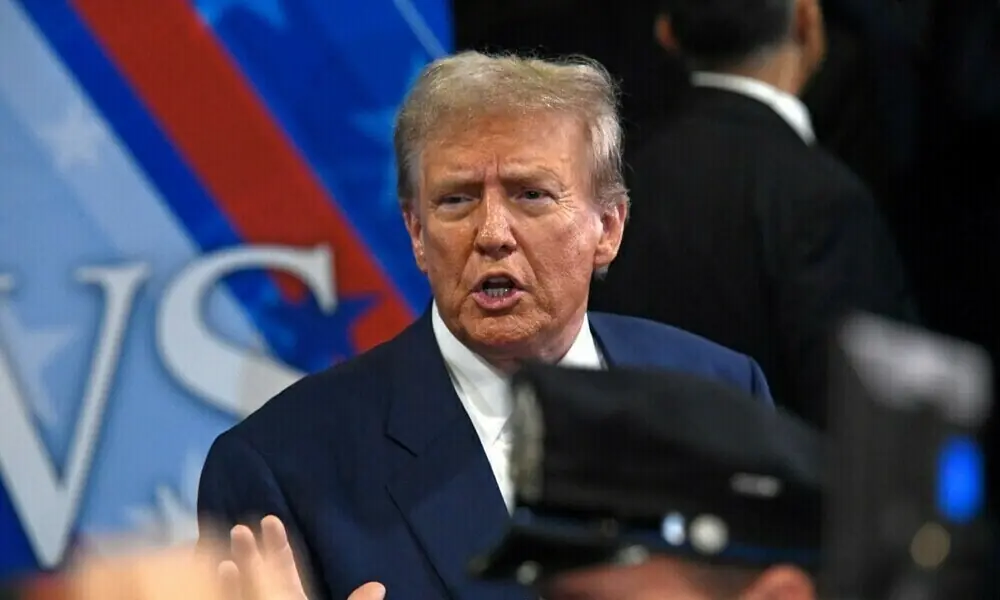
Trump says will demand conflict compensation from Iran

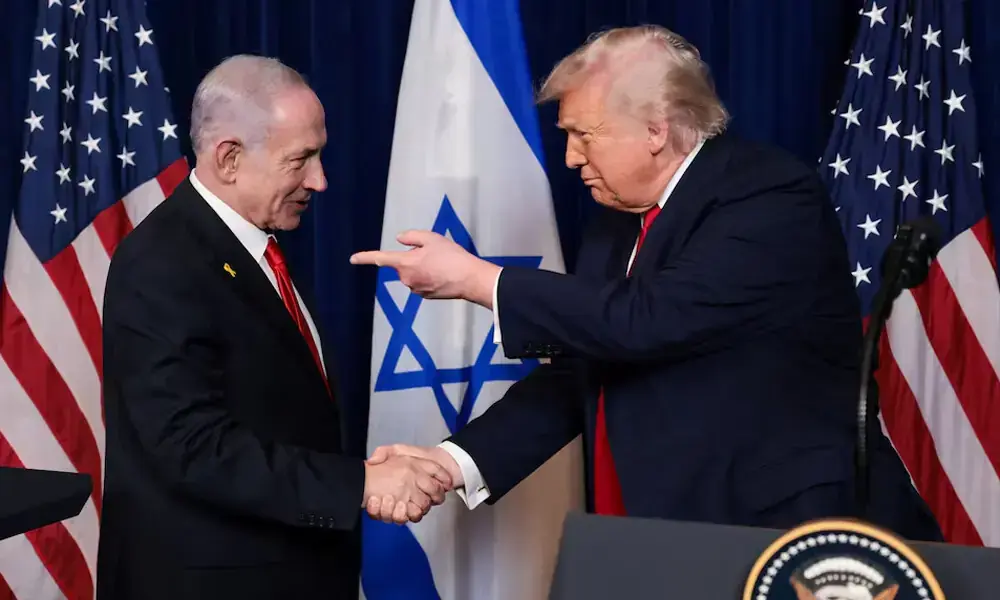
WASHINGTON: US President Donald Trump said Monday he would seek conflict compensation from Iran as part of any peace negotiations, citing attacks and atrocities stretching back decades allegedly backed or perpetrated by Tehran. Iran is “asking for compensation for the damage done to them during the last five month Military Conflict… I am likewise demanding compensation from Iran, for all of the people that they have killed and gravely wounded with their roadside bombs and many conflicts,” Trump posted. In what has become a regular pattern, Trump last week threatened to hit Iran “very hard”, potentially with attacks against civilian infrastructure, only to pull back, hinting a peace deal was near. His latest comments on Truth Social came a day after Trump said he was “low-keying” his approach to the conflict, suggesting that he was prepared to let economic pressure mount in place of further military strikes. Digital media outlet Axios said that the US president did not express any frustration with Iran’s delaying an agreement to open the Strait of Hormuz in their interview with him published Sunday. Tehran has demanded that the US first end its blockade of Iranian ports and lift sanctions on its oil industry. As negotiations have stalled, the strait’s blockage by Iran has sent fuel prices soaring and rattled the world economy, putting pressure on Trump ahead of midterm elections in November. In his post, Trump referenced the bombing of the USS Cole in 2000 and added that compensation should also “be paid to the families of the hundreds of thousands of innocent protestors that Iran has killed over the last 50 years”. “I have instructed my representatives to put this firmly into any, and all, future negotiations,” he said.